

To remove pet odor, find the source, remove what you can, break down the remaining residue with an enzyme cleaner, then wash fabrics, ventilate and filter the air. If you're wondering how to remove pet odor from home, avoid masking sprays, as urine, skin oils and dander can remain trapped in carpets and upholstery. The WakaPaw Pet Odor Eliminator Spray helps break down odor in sofas, pet beds, rugs and car seats as it dries.
Key Takeaways
- Find the source first. Use your nose and a blacklight to locate urine spots before you clean.
- Use an enzyme cleaner, not fragrance. Enzymes break down the organic residue behind pet odor; air fresheners only cover it.
- Wash soft surfaces weekly. Pet beds, blankets and slipcovers hold skin oils and dander that cause "dog smell."
- Clean the air, too. Ventilate, replace HVAC filters every 1–3 months and run a HEPA + activated carbon air purifier.
- Prevent it from coming back. Clean accidents within minutes, scoop litter daily and follow a weekly odor routine.
What Causes Pet Odor in Your House?

Pet odor in a house usually comes from four sources: urine, skin oils and dander, bedding and soft furnishings, and litter boxes. Even when a room looks clean, odor-causing residue can stay in carpets, upholstery and other porous materials. If you've been asking how do you get rid of pet odors that seem to linger even after cleaning, start by identifying which of these sources is responsible. Finding the source is the first step to removing pet odor instead of masking it.
Urine and Uric Acid Crystals
Pet urine is the most common cause of persistent pet odor. As urine dries, it leaves uric acid crystals and other residues that do not dissolve easily in water, so they stay in carpet fibers, padding, upholstery and unfinished wood.
Dried urine often smells stronger again when humidity rises or the spot gets damp. Ordinary household cleaners may remove the visible stain without removing the odor source. When considering how to eliminate pet odor in house areas affected by urine, choose an enzyme cleaner made for pet urine to break down these organic residues; always choose one suited to the surface and follow the label.
Skin Oils, Dander and Wet-Dog Smell
Dogs and cats shed skin cells, and their coats carry natural oils that rub off on sofas, rugs and bedding. Over time this buildup creates the familiar "pet smell," even without accidents.
Wet-dog smell gets stronger when a dog's coat is damp, because moisture releases odor compounds from skin oils and the microorganisms living on the skin. Groom your pet regularly, dry them fully after baths and walks, and wash the fabrics they use most. If the smell is unusually strong or comes with itching, redness or discharge, see a veterinarian.
Bedding, Litter Boxes and Soft Furnishings
Pet beds, blankets, cushions and curtains trap hair, dander, saliva and body oils, so they can keep smelling after floors are clean. Litter boxes add odor from waste, used litter and residue around the box.
If you're looking for how to get rid of pet odor in home environments where soft furnishings are the main problem, regular washing and vacuuming are essential. To prevent buildup:
- Scoop solid waste from litter boxes at least once a day.
- Wash pet bedding and blankets about once a week.
- Vacuum upholstered furniture and rugs weekly.
- Wipe around food bowls, litter trays and feeding areas.
- Check under furniture and in corners where pets like to rest.
Why Pet Smell Comes Back on Humid Days

Pet smell comes back on humid days because moisture reactivates odor compounds trapped in dried urine, carpets and fabrics. High indoor humidity also slows drying after cleaning, which can add musty smells.
If the odor returns every time the weather turns humid, re-treat the previously soiled spots instead of spraying air freshener. This is an important part of learning how to get rid of pet odor for the long term, especially when moisture brings old smells back. Dry damp materials fully, keep indoor humidity in check and look for urine that may have soaked into carpet padding or flooring.
Eliminate stubborn pet odors with WakaPaw Pet Odor Eliminator Spray. Enzyme-powered formula helps tackle od...
How to Remove Pet Odor: 10 Steps That Work
To remove pet odor for good, work in this order: find the source, remove the mess, treat the residue with an enzyme cleaner, then clean fabrics, floors and the air. Adjust each step to the material, and test any product on a small hidden area first.
Step 1 – Find the Source With a Sniff Test and Blacklight

Start where the smell is strongest. Check corners, carpet edges, furniture legs, pet beds, curtains and the spots where your pet sleeps or has had accidents.
For suspected urine, darken the room and scan with a blacklight; dried urine often glows under a blacklight. The WakaPaw Pet Odor Atomizer has a built-in blue light for this, so you can spot and treat hidden stains with one device. Identifying the source is particularly important if you're figuring out how to remove pet odor from home after ordinary cleaning has failed.
Not every glowing mark is urine, and very old stains may not glow clearly, so use the light as a guide rather than proof. Mark each suspected spot with removable tape so you can treat them one by one.
Step 2 – Remove Solids and Blot, Don't Scrub
Remove solid waste first, wearing disposable gloves if needed. For fresh urine, press clean paper towels or an absorbent cloth onto the spot and replace them as they get wet, until no more moisture comes up.
Don't scrub: scrubbing spreads the mess, pushes urine deeper into carpet fibers and can damage upholstery. Launder washable fabrics according to the care label; for carpet and upholstery, move on to an enzyme treatment.
Step 3 – Break Down Odor With an Enzyme Cleaner

An enzyme cleaner is the most effective way to remove the residue behind pet odor. Its enzymes break down the organic compounds in urine, saliva, vomit and skin oils into simpler substances that no longer smell. Results depend on the formula, the stain, the material and correct use. For anyone researching how do you get rid of pet odors caused by old accidents, allowing the cleaner enough time to work is just as important as choosing the right formula.
- Test the product on a hidden area to check for discoloration.
- Apply enough product to reach as deep as the mess went; the label gives the recommended coverage.
- Leave it wet for the full dwell time on the label, often 10–15 minutes or longer for old stains.
- Don't wipe it away early.
- Let the area air-dry with good ventilation.
Don't rinse automatically: some enzyme cleaners are designed to keep working as they dry, while others call for a rinse or extraction. Follow the directions for the product you use.
For sofas, pet beds, rugs and car seats: the WakaPaw Pet Odor Eliminator Spray mists a fragrance-free, plant-based enzyme formula deep into fabric fibers. The enzymes keep working as the mist dries, with no rinsing and nothing to cover up the smell.
Important: never mix an enzyme cleaner with vinegar, bleach or other cleaning chemicals. Mixtures can stop the enzymes from working or create harmful fumes.
Step 4 – Deodorize Carpets and Rugs With Baking Soda
Baking soda absorbs some odors from dry carpets and rugs, so it works well as a finishing step after the source has been treated.
- Make sure the carpet is completely dry.
- Sprinkle a light, even layer of baking soda over the area.
- Leave it for at least 15 minutes, or overnight for stronger odors, and keep pets off the area.
- Vacuum thoroughly.
Baking soda does not break down old urine, so use it as a supplement, not a replacement for an enzyme cleaner. Don't apply it to wet carpet, where it clumps.
Step 5 – Wash Pet Beds, Blankets and Slipcovers

Wash pet beds, blankets and slipcovers about once a week, because they absorb skin oils, saliva and hair that cause pet smell. Shake off loose hair first and check the care label.
Use a suitable detergent and the warmest water the fabric allows. Pretreat heavily soiled areas with a compatible enzyme product if the care label permits. Dry everything completely before giving it back to your pet, since damp bedding turns musty. If a foam insert still smells after repeated cleaning, replace it.
Step 6 – Treat Couches, Mattresses and Curtains
Couches, mattresses and curtains trap odor below the surface, so a quick spray of fragrance only hides it for a few hours. If you're searching for how to get rid of pet odor in home furnishings such as sofas and mattresses, treat the fabric itself rather than just freshening the air:
- Remove washable covers where possible.
- Vacuum seams, crevices and cushions to lift hair and debris.
- Blot any fresh urine without scrubbing.
- Apply a fabric-safe enzyme treatment, such as a fine enzyme mist, according to the label.
- Let the fabric dry completely.
Wash machine-washable curtains; for non-washable ones, use a fabric-safe method or a professional cleaner. Avoid soaking mattresses and upholstery, since excess moisture can damage materials and cause mold. A fine mist that dampens the fibers without saturating them is safer for soft furnishings, and a product made for carpet is not automatically safe for every fabric.
Step 7 – Clean Hard Floors and Baseboards
Hard floors hold pet odor in seams, grout lines, floor edges and baseboards, and urine can seep through worn finishes or gaps between boards.
Clean sealed tile with a suitable floor cleaner, paying attention to grout and corners. For hardwood, use a cleaner approved for the floor's finish, avoid excess water and dry the surface right away. If urine has reached unsealed wood or gone under the flooring, surface cleaning won't be enough; investigate before trying stronger chemicals or refinishing.
Step 8 – Ventilate and Replace HVAC Filters
Fresh air lowers airborne odor and moisture after cleaning. Open windows when outdoor air quality allows and run exhaust fans.
Replace your HVAC filter every 1–3 months, or as the manufacturer recommends; homes with several pets often need the shorter interval. A clean filter captures airborne particles but does not remove odor gases, so ventilation and source removal still matter. If indoor humidity stays high, use a dehumidifier and check for leaks or damp materials.
Step 9 – Run a HEPA and Activated Carbon Air Purifier
An air purifier with both a HEPA and an activated carbon filter reduces airborne pet dander and some odors. HEPA filters capture particles such as dander, and activated carbon adsorbs odor-causing gases.
For better results:
- Choose a purifier sized for the room, with a suitable clean air delivery rate (CADR).
- Check how much activated carbon the unit contains; more carbon handles odors better.
- Replace filters on the manufacturer's schedule.
- Run it continuously in the rooms where pets spend the most time.
An air purifier cannot remove urine trapped in carpet padding or furniture, so treat the source first.
Step 10 – Build a Weekly Odor-Prevention Routine
Preventing odor buildup is much easier than removing months of residue. Use this routine:
- Daily: scoop litter, remove pet waste, wipe feeding areas and treat accidents within minutes.
- Weekly: vacuum pet hair, mop high-traffic floors, wash pet blankets and give sofas, pet beds and car seats a quick enzyme mist.
- Every 2–4 weeks: deep-clean high-use pet areas and wash bed inserts per their care labels.
- Monthly: check HVAC filters, clean around the litter box and look for hidden stains or damp spots.
Adjust the schedule to the number of pets, how much they shed and how often accidents happen. Consistency keeps your home fresh without relying on fragrance sprays.
The Easier Way to Remove Pet Odor From Fabrics: WakaPaw

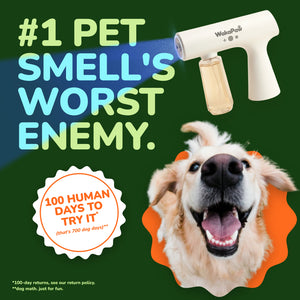
The WakaPaw Pet Odor Eliminator Spray is a cordless, fragrance-free pet odor eliminator that mists a plant-based enzyme formula into sofas, pet beds, rugs and car seats to break down the residue behind pet odor instead of masking it. For pet owners exploring how to eliminate pet odor from frequently used fabrics, it offers a convenient way to incorporate enzyme treatment into a regular cleaning routine. It is designed for the soft surfaces where pet smell builds up and trigger sprays struggle to reach evenly.
Why it works on pet odor:
- Nano mist reaches into the fibers. The ultra-fine mist settles into fabric, where odor-causing residue clings, without soaking the cushion.
- Plant-based enzymes break odor down. The enzymes keep working as the mist dries, so there's no rinsing or wiping.
- Fragrance-free. Nothing is added to cover the smell, which suits cats, dogs and scent-sensitive people.
- Built-in blue light. Helps you spot hidden pet stains before you treat them (Step 1).
- Made for everyday use. Safe to use around pets and kids, cordless, 60 minutes of misting per charge and a 30-minute USB-C recharge. One 5 fl oz (150 ml) enzyme bottle lasts about a month.
How to use it in 3 steps:
- Load the enzyme bottle.
- Mist from about 2 feet away, sweeping slowly over the fabric.
- Let it dry; the enzymes keep working as it dries.
Use it on sofas, pet beds, rugs, mattresses, curtains, car seats, closets and the area around the litter box. For fresh accidents or visible stains, blot or extract the liquid first, then mist to deal with the odor left in the fibers.
WakaPaw is rated 4.8 stars by more than 1,200 customers and comes with a 100-day return policy, so you can try it at home. Shop the WakaPaw Pet Odor Eliminator Spray
How to Get Rid of Pet Odor Room by Room
Each surface needs a different method. If you're deciding how to get rid of pet odor across different rooms and materials, use this table to pick the right treatment without damaging the material.
|
Surface |
Best method |
What to avoid |
|---|---|---|
|
Carpet |
Blot fresh urine, apply a carpet-safe enzyme cleaner, let it dwell and dry fully. |
Scrubbing, oversaturating, relying on baking soda alone for urine. |
|
Couch |
Vacuum crevices, blot stains, then mist a fabric-safe enzyme formula and air-dry. |
Excess water, untested chemicals, all-purpose cleaners. |
|
Mattress |
Blot right away, use a low-moisture enzyme treatment and dry completely. |
Soaking the foam, trapping moisture, steam on urine. |
|
Pet bed |
Wash the cover weekly in the warmest water allowed; mist the insert with enzyme between washes. |
Putting it back damp, heavy fragrance. |
|
Hardwood |
Wipe liquid immediately and use a cleaner approved for the finish. |
Standing water, abrasive scrubbing, harsh chemicals. |
|
Tile and grout |
Clean with a suitable floor cleaner, focusing on grout lines and seams. |
Leaving wet residue, abrasive tools on delicate finishes. |
|
Car seats |
Check the material, blot spills, use a fabric- or leather-safe cleaner and a light enzyme mist on cloth seats. |
Soaking seat foam, household chemicals without testing. |
If a smell persists on any surface, the contamination has probably gone deeper than routine cleaning can reach.
Natural Ways to Remove Pet Odor
Natural products like baking soda, white vinegar and activated charcoal can reduce mild pet odors, but none of them reliably removes old urine. If you're exploring how to eliminate pet odor with household ingredients, remember that these options are best used for mild odors and should not replace an enzyme treatment for urine. Use them alongside, not instead of, an enzyme treatment.
Baking Soda
Baking soda absorbs some odors on dry surfaces and works well as a final step on carpets and rugs after the stain is treated. It does not break down the compounds in old urine. Keep pets from licking the powder or breathing the dust.
White Vinegar
Diluted white vinegar (about 1 part vinegar to 1 part water) can clean some hard surfaces and cut light odors. It is not a reliable urine treatment, especially once urine has reached carpet padding or flooring, and it can etch natural stone and some finishes. Never mix vinegar with bleach, and don't use it together with an enzyme cleaner.
Activated Charcoal
Activated charcoal adsorbs some odor compounds from the air, so it helps in closets, near litter boxes and in cars. Place it where pets can't chew or spill it, and refresh it as directed. It does not clean stains or remove the source.
What Not to Use on Pet Odor
The wrong product can damage surfaces, leave residue or create dangerous fumes. Avoid these five mistakes.
Ammonia-Based Cleaners
Don't use ammonia-based cleaners on urine spots. Urine contains ammonia, so an ammonia smell can draw pets back to the same spot to mark it again. Use an enzyme cleaner made for the surface instead.
Bleach on Urine or Mixed With Other Cleaners
Never put bleach on urine or mix it with ammonia, vinegar or other cleaners. Bleach reacts with ammonia and acids to release toxic gases. Use disinfectants only as their labels direct and only on approved surfaces.
Steam on Pet Urine Stains
Don't steam-clean untreated urine stains. Heat can bond urine proteins to the fibers and lock in both the stain and the smell. Treat the spot with an enzyme cleaner first, then follow the product and carpet care directions before any machine cleaning.
Mixing Vinegar With Enzyme Cleaners
Don't combine vinegar and enzyme cleaners unless the manufacturer says it's safe. Vinegar's acidity can deactivate the enzymes. Use one treatment at a time and let it dry fully before applying another.
Essential Oils Around Cats
Many essential oils, including tea tree, wintergreen, citrus and pine, can be toxic to cats, which can be exposed by breathing them, touching them or grooming oil from their fur. Don't use essential oils as a pet-odor fix, never apply them to pets or surfaces they lick, and ask your veterinarian if you're unsure. A fragrance-free enzyme product avoids the issue entirely.
What to Do When Pet Odor Won't Go Away
If pet odor comes back soon after cleaning, the source is still there, usually urine below the surface or a health issue in your pet. Adding more fragrance or deodorizing powder only hides it.
Urine in Carpet Padding or Subfloor
Urine soaks through carpet fibers into the padding and sometimes the subfloor, so cleaning only the visible stain can leave a hidden reservoir of odor.
Signs of a deeper problem:
- The urine smell returns after the carpet dries.
- The odor gets stronger on humid days.
- The smell keeps coming from the same spot.
- There is staining or odor along carpet edges, floor joints or baseboards.
A professional cleaner can inspect the carpet and padding, treat the layers they can reach, or recommend replacing padding that can't be saved. If the subfloor has absorbed urine, it needs to be cleaned and fully dried; after that, an odor-sealing primer can lock in any remaining smell. Sealing does not replace removing the contamination, and badly damaged materials may need replacing.
Health Causes of a Sudden Pet Smell
A sudden, strong smell can come from your pet rather than your home. Dental disease, ear infections, skin conditions and anal gland problems are common causes.
Watch for bad breath, head shaking, ear discharge, constant licking, red skin, scooting or unusual discharge. If the smell is new, persistent or comes with any of these signs, book a vet visit rather than covering it with grooming sprays.
How Do Professionals Remove Pet Odors?
Professionals remove pet odors by finding the source, measuring how deep the contamination goes, then cleaning, extracting and drying the affected materials. A typical process looks like this:
- Inspect the property: identify affected areas, surface materials and whether the odor comes from urine, dampness or another source.
- Locate hidden contamination: use blacklights and moisture meters to map suspected areas.
- Choose the right treatment: match cleaning agents, including professional enzyme treatments, to the contaminant and the material.
- Extract the contamination: use extraction equipment to pull out liquid, soil and cleaning residue.
- Dry the area: proper drying prevents moisture problems and shows whether odor remains.
- Fix deeper damage: treat or replace padding and subflooring if urine has reached them.
- Check the result: re-assess the area once it's dry, without relying on fragrance.
Call a professional when several rooms are affected, urine has gone under the flooring or home treatments have failed more than once. Ask which products and methods they use, whether they suit your materials and what extra work may be needed.
Conclusion: Remove Pet Odor at the Source
The most effective way to remove pet odor from your home is to find the source, break down the residue and stop it from coming back. If you're still wondering how do you get rid of pet odors that return after cleaning, locate the affected areas, remove what you can, treat what's left with an enzyme cleaner, then wash bedding, ventilate and keep up a weekly routine.
If the smell keeps returning, look for hidden urine in carpet padding, upholstery or the subfloor instead of masking it. For the fabrics where pet smell builds up most, such as sofas, pet beds, rugs and car seats, the WakaPaw Pet Odor Atomizer makes that weekly enzyme treatment quick and fragrance-free.
Comparing products before you buy? See our side-by-side of 5 Best Pet Odor Eliminators of 2026 for couches, pet beds and cars.
Stay connected with WakaPaw! Explore our blog and follow us on Facebook and Instagram for helpful pet care tips, product updates, and exclusive offers. Have a question? Reach out to us at support@wakapaw.com. Our team is happy to help and will respond within 24 hours.
Frequently Asked Questions
1. What is the fastest way to remove pet odor from a house?
The fastest way is to treat the source: blot or remove the mess, apply an enzyme cleaner, then ventilate the room. For fabrics like sofas, pet beds and car seats, a fragrance-free enzyme mist such as the WakaPaw Pet Odor Atomizer treats a large area in minutes and needs no rinsing.
2. Why does pet odor come back after cleaning?
Pet odor comes back when urine, skin oils or dander are still trapped in carpet padding, upholstery foam or fabric fibers. Humidity can reactivate dried urine, so the smell returns on damp days. Re-treat the area with an enzyme cleaner and check for urine below the surface.
3. Does vinegar or baking soda get rid of pet odor?
Vinegar and baking soda can reduce mild pet smells, but they do not reliably remove urine odor. Baking soda absorbs odors on dry carpet, and diluted vinegar cleans some hard surfaces. For urine, use an enzyme cleaner and never mix vinegar with bleach or enzyme products.
4. How do I get pet smell out of my couch?
To get pet smell out of a couch, vacuum the seams and cushions, wash removable covers, then treat the fabric with a fabric-safe enzyme product. Use a fine mist rather than soaking the cushions, and let the couch air-dry completely before anyone sits on it.
5. Are pet odor eliminators safe for cats and dogs?
Most enzyme-based pet odor eliminators are safe around cats and dogs when used as directed. Keep pets off treated areas until they are dry. Avoid products with strong fragrance or essential oils, which can bother pets, especially cats. A fragrance-free, plant-based enzyme formula is the gentler choice.
