

To get dog urine smell out of carpet, blot fresh liquid, clean the affected area, and treat remaining residue with a carpet-compatible product. This guide from WakaPaw explains fresh-accident cleanup, older stains, padding problems, and everyday odor care. If the smell returns after drying, investigate contamination below the surface before repeating the same treatment.
- Blot promptly: absorb urine without rubbing it farther into the carpet.
- Control moisture: rinsing and treatment must suit the carpet and its backing.
- Follow the product directions: enzyme cleaners have different application and finishing requirements.
- Check the padding: a clean-looking surface can hide deeper contamination.
- Use baking soda selectively: it is an optional dry-area freshening step, not a replacement for urine removal.
Why Dog Urine Smell Stays in Carpet

Carpet has several layers. Urine can pass through the visible pile into the backing, padding, and sometimes the floor underneath. Cleaning the top fibers may leave part of the source untouched.
Odor can also persist when residue remains after a previous cleanup. A patch smelling better immediately after treatment does not establish that the contamination is gone.
The Carpet and Rug Institute notes that urine may damage carpet dyes and backing as well as create odor problems. A remaining stain and a remaining smell therefore need separate assessment: one may reflect permanent discoloration, while the other indicates a continuing odor source.
What You Need to Remove Dog Urine From Carpet

Gather supplies before adding water or cleaner. Your carpet’s care instructions should determine which treatments and tools are appropriate.
- Clean white towels or plain white paper towels.
- Gloves.
- Cool water, if wet cleaning is permitted.
- A carpet-compatible urine treatment.
- A fan or suitable ventilation for drying.
- An optional UV urine-detection light for investigating older spots.
- Optional extraction equipment approved for the carpet.
- Baking soda only if the carpet and vacuum manufacturers permit fine powders.
Spot-test cleaning products as directed before treating a visible area. Wool, delicate fibers, and mixed-fiber carpets require particular care; WoolSafe recommends following the needs of the most sensitive fiber in a blend.
How to Get Dog Urine Smell Out of Carpet: Fresh Stains

Fresh urine is easier to address before it spreads into deeper layers. Begin with absorption, then use a compatible cleaning and odor-treatment method.
Step 1 – Blot, Don’t Scrub

Put on gloves and press a clean white towel onto the wet patch. Replace it as it absorbs urine, continuing until little more liquid transfers.
Work carefully around the edges rather than rubbing outward. Scrubbing can spread contamination and disturb the carpet pile.
Step 2 – Rinse With Cool Water and Blot Again

If your carpet permits water-based cleaning, use a small, controlled amount of cool water to help lift remaining urine. Blot again with fresh towels.
Avoid pouring water into the carpet until the backing is soaked. If the area is too large to rinse and absorb effectively, suitable extraction equipment or professional help may be more appropriate.
Humane World for Animals recommends a cool-water rinse and blotting for fresh urine accidents. Keep the material’s moisture limits in mind throughout the process.
Step 3 – Apply WakaPaw: Mist and Let Dry

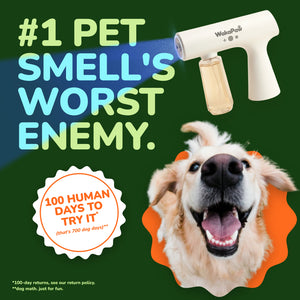
After initial cleanup, use a compatible odor treatment according to its directions. If you are considering an enzyme carpet cleaner, WakaPaw offers a cordless way to apply its fragrance-free, plant-based enzyme formula.
Spot-test first, insert the WakaPaw bottle, and mist from about 2 feet away, sweeping slowly. Let the area dry fully before pets return.
The published method is to let the mist dry rather than immediately wiping it away. It applies treatment; it does not extract urine from the carpet.
Step 4 – Deodorize With Baking Soda and Vacuum, If Appropriate

Baking soda is optional. Consider it only after the cleaning process is complete and the carpet is completely dry.
If your carpet and vacuum manufacturers allow it, sprinkle a light layer, keep pets away, and vacuum thoroughly after about 15 minutes. Do not add powder over a wet enzyme treatment.
This is a freshening step, not proof of urine removal. Skip it if the carpet-care instructions or vacuum restrictions make fine powders unsuitable.
Eliminate stubborn pet odors with WakaPaw Pet Odor Eliminator Spray. Enzyme-powered formula helps tackle od...
How to Get Old Dog Urine Out of Carpet

Older accidents need a more deliberate inspection. Locate the affected area and review previous treatments before deciding whether to rewet the spot.
Find Dried Urine Spots
Inspect carpet edges, corners, furniture legs, and places your dog has used before. Check nearby areas rather than relying only on the visible stain.
A purpose-made UV urine-detection light may help identify suspected deposits in a darkened room. Fluorescence is a clue, not confirmation: other residues can glow, and some urine spots may be difficult to see.
Combine visual inspection with the location of the odor. Humane World for Animals includes blacklight inspection among its methods for finding older soiling.
Rehydrate and Treat Set-In Stains
Some treatments for dried urine require controlled rewetting so the formula can contact the residue. Follow the selected product’s instructions rather than pouring plain water onto every old stain.
Check whether previous cleaner residue needs removal first. Apply only the specified amount, allow the required contact time, and complete the finishing steps.
If color remains after treatment, avoid repeatedly escalating the strength. Urine can alter carpet dyes, and a permanent color change will not necessarily respond to more cleaning.
How to Eliminate Dog Urine Odor in Carpet Padding

When urine reaches the padding, treating only the pile may leave odor behind. Repeated accidents in the same location can increase the amount of affected material.
Signs that warrant a deeper assessment include:
- Odor returning after the carpet dries.
- A persistent smell from the same patch.
- Repeated unsuccessful surface treatments.
- Known large or overlapping accidents.
A qualified cleaner can assess the backing, padding, and underlying floor, then recommend treatment or replacement where needed. Humane World for Animals notes that some contaminated carpet and padding may require replacement. Routine surface odor care can support maintenance afterward.
How to Get Rid of Dog Urine Smell Naturally

Household ingredients have limited, material-dependent uses. Choose one approved method rather than combining several ingredients into a stronger mixture.
Vinegar and Water
Diluted white vinegar appears in some carpet-cleaning guidance, but it is not a universal urine-odor solution. Check your carpet manufacturer’s instructions before using it.
For a carpet that permits the method, the Carpet and Rug Institute lists one cup of white vinegar to two cups of water as a follow-up step after its detergent solution, rather than as a standalone cleaner. Use controlled application and blotting rather than soaking the backing.
Do not add vinegar to an enzyme formula or a cleaning-machine tank without explicit approval. Remove previous treatment residue as directed before switching products.
Baking Soda
Baking soda can help freshen a dry, cleaned area, but it does not remove liquid trapped beneath carpet or extract dried deposits.
Use the optional dry-carpet method described above only when permitted. Keep dogs away from loose powder and remove it thoroughly.
Avoid repeating powder applications when the smell keeps returning. Investigate the contamination rather than treating the air above it.
Hydrogen Peroxide
Hydrogen peroxide is an oxidizer, not an enzyme cleaner or a universally gentle “natural” remedy. Even a 3% solution can lighten some carpets, especially light-colored wool.
Use peroxide only when the carpet manufacturer approves the exact treatment. Spot-test, let the test area dry, and follow the specified application and removal instructions.
Plain peroxide is not equivalent to a formulated carpet-cleaning product and may discolor fibers. Do not mix it with vinegar, bleach, or other cleaners.
Natural Remedies vs. an Enzyme Carpet Cleaner: Which Works Better?

For lingering urine contamination, a purpose-formulated treatment offers directions for a defined cleaning task. Household ingredients have narrower uses and do not become enzymatic cleaners when mixed.
| Option | Useful role | Main limitation |
|---|---|---|
| Water and blotting | Removing accessible fresh urine | May leave absorbed residue |
| Diluted vinegar | Selected care-approved cleaning tasks | Not suitable for every carpet or deep deposit |
| Baking soda | Optional freshening on dry carpet | Does not extract urine |
| Peroxide treatment | Approved treatment of certain discoloration | Can affect dyes |
| Enzyme treatment | Addressing suitable organic residue | Must suit the material and contact the residue |
| Extraction | Removing liquid and soil from compatible carpet | Requires appropriate equipment, technique, and drying |
There is no universal winner for every accident. The most useful approach combines source removal, an appropriate treatment, and complete drying.
Can You Use a Carpet Cleaner Machine on Dog Urine?

Yes, when the carpet and machine instructions permit it. An extractor applies liquid and uses suction to remove it, which is different from simply steaming the surface.
Use only machine-approved solutions at the stated dilution. Make sufficient extraction passes and allow complete drying. Do not put WakaPaw formula or another spot treatment in the tank unless its manufacturer explicitly authorizes that use.
Humane World for Animals cautions against steam cleaning urine-contaminated carpet and upholstery. Follow the exact equipment guidance rather than treating every machine as equivalent.
How to Get Dog Odor Out of Carpet Without an Accident

General dog odor may come from accumulated hair, dirt, body oils, or nearby bedding. Start by checking where the smell is strongest instead of assuming the entire carpet needs wet treatment.
Vacuum regularly using a machine suited to the pile, wash removable dog bedding according to its label, and clean tracked-in dirt promptly. Shaw emphasizes frequent, thorough vacuuming and notes that some looped or long-pile carpets need gentler brush settings.
If odor persists, check for hidden accidents, damp materials, or another source before repeatedly deodorizing.
Keep Carpets Fresh Between Cleanings With WakaPaw

On compatible carpet, WakaPaw can fit into routine odor care after loose dirt and any initial mess have been removed. Its misting format offers a convenient application method without added fragrance.
Use it as directed and allow full drying. It complements regular cleaning rather than replacing vacuuming or deeper treatment where needed.
The Starter Kit is currently $99.99 with a free enzyme bottle, with 100-day returns subject to the policy. Check the product page for current offers.
Mistakes to Avoid When Cleaning Dog Urine

An unsuccessful cleanup often needs reassessment rather than a stronger mixture. Avoid these common problems:
- Scrubbing aggressively: absorb liquid without spreading the accident.
- Overwetting: respect the carpet, backing, and floor beneath it.
- Treating only the visible outline: urine may extend beyond that area.
- Mixing cleaners: use combinations only when explicitly authorized.
- Shortening contact time: complete the selected product’s process.
- Using an unapproved machine solution: follow equipment instructions.
- Covering damp carpet: keep the area open to dry.
- Repeating surface treatment without checking padding: investigate recurring odor.
The Carpet and Rug Institute also warns that cleaning residue can attract soil. Complete any required residue-removal steps instead of assuming more product produces a cleaner result.
Conclusion

To get dog urine smell out of carpet, remove fresh liquid promptly, use a treatment matched to the material, and let the area dry fully. For older accidents, inspect the full affected area and investigate padding when odor returns.
For compatible carpet odor care, WakaPaw Pet Odor Eliminator can support the routine after initial cleanup. Lasting results depend on addressing the source rather than repeatedly treating only the surface.
Have a product question? Email support@wakapaw.com, and follow WakaPaw on Facebook and Instagram for pet-home care tips and product updates.
FAQs
What is the fastest way to get dog urine smell out of carpet?
Blot fresh urine immediately, then follow a carpet-compatible cleaning and odor-treatment method. Acting quickly helps remove liquid before it spreads, but the full treatment and drying process still matter.
How do I clean dog urine from carpet without a machine?
Use clean towels to absorb the urine, rinse sparingly if the carpet permits it, and apply a compatible treatment as directed. Larger or deeply absorbed accidents may need extraction or professional assessment.
Can WakaPaw be used after cleaning a urine spot?
Yes, on compatible carpet. Complete the initial cleanup, check previous treatment compatibility, spot-test, and follow WakaPaw’s application instructions.
Should I wipe WakaPaw off the carpet?
Its published method calls for letting the mist dry. Keep dogs away until the treated area is fully dry.
Does baking soda remove dog urine smell permanently?
It may freshen dry carpet, but it does not establish that urine contamination has been removed. Recurring odor needs a source assessment.
Can old dog urine smell be removed from carpet?
It may improve with suitable treatment, but results depend on the material and depth of contamination. Affected padding or underlying flooring may require additional work.
Why does the carpet smell again after drying?
Residue may remain below the surface, the treatment may have missed part of the accident, or a new accident may have occurred. Check these possibilities before repeating the same method.
Can I put an enzyme spot cleaner in a carpet-cleaning machine?
Only if both the product and machine manufacturers authorize it. A treatment designed for direct application is not automatically a tank solution.
