

Dog motion sickness can turn a short car trip into drool, whining and a mess on the back seat, but many dogs ride better with the right setup and slow practice. This guide from WakaPaw shows you how to spot the early signs, help your dog during the ride and get her used to the car, step by step.
Key Takeaways
- If she starts yawning, licking her lips or drooling: pull over safely, walk her on a leash and let the car cool down.
- If you're planning any ride: give her a secured spot in the back seat, cool fresh air, a light stomach and fresh water.
- If she gets sick often: start short, happy practice rides and build up at her pace, over about 4 weeks.
- If practice isn't enough: ask your vet about the FDA-approved medicine, and never give human travel pills on your own.
- If you need to protect the seat while she learns: our Back Seat Cover for Dogs is the best pick. It's waterproof, so a bad ride wipes up fast, though it won't stop the sick feeling itself.
Why Dogs Get Motion Sickness in the Car
Dogs get carsick when the brain gets two signals that don't match. Her inner ear feels the car turn, brake and speed up, while her eyes see a seat or a door that isn't moving. The Merck Veterinary Manual explains that the inner ear is linked to the part of the brain that triggers vomiting. That mismatch is what turns a car ride into an upset stomach.
Young dogs get it most. A puppy's inner ear is still developing, and VCA Animal Hospitals says many grow out of it by about 1 year old. A few other things can make it worse:
- Rare rides: a dog who rides only a few times a year may never get used to the motion.
- A bad memory: if early rides ended in vomit or at the vet, the car alone can make her feel sick.
- Ear problems: an ear infection can cause the same signs. If an older dog suddenly gets carsick, have her checked.
Signs Your Dog Feels Carsick

Many dogs show signs before they throw up, so it helps to know the early ones. Here's how the signs often build, though not every dog shows each stage.
| Stage | What you see |
|---|---|
| Early | Yawning, lip licking, lots of swallowing, going still and quiet |
| Building | Lots of drool, whining, panting, pacing or trying to move around |
| Late | Gagging and throwing up; diarrhea in bad cases |
| After the ride | Tired, and not hungry for a few hours |
Use the table as clues, since only your vet can say for sure what's wrong. The Merck Veterinary Manual says the signs usually fade once the car stops.
When to call your vet
- Vomiting that keeps going after the ride, or signs she's dehydrated (low on water)
- An older dog who never got carsick and suddenly does
- A tilted head, stumbling or odd eye movements, which can point to an ear problem
- Car sickness so bad she can't make the trips she needs, like vet visits
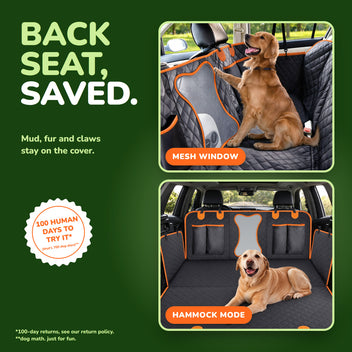
Waterproof dog seat cover for the back seat: mud, fur and drool stay off, and your dog sees you through the...
Motion Sickness or Car Anxiety?
Motion sickness and car anxiety can look alike, and they often show up together. Both bring drool, lip licking and panting. Timing is often the best clue: a carsick dog is fine in the driveway and gets worse once you're moving, while a scared dog may start shaking when she sees the car keys.
| Clue | Mostly motion sickness | Mostly fear |
|---|---|---|
| When it starts | After the car starts moving | Before the trip, at the leash or the car door |
| Main signs | Drooling, yawning, throwing up | Shaking, barking, won't get in |
| When the car stops | Calms down fairly fast | Can stay tense even when parked |
| What helps most | Car setup, meal timing, anti-nausea medicine | Slow practice with treats, calming help from your vet |
Many dogs have both. A puppy who threw up on every ride can learn to dread the car, and that fear can make the sick feeling worse. VCA points out that anti-nausea medicine helps the stomach, not the fear. So a dog with both may need help for each.
How to Help a Carsick Dog, Step by Step
Helping a carsick dog works best as a plan, done in order. Set up the car and plan her meals before you leave, act fast during the ride, clean up calmly, then practice. Here is each step.
Step 1: Set up the car so she feels less motion
Where and how your dog rides changes how much motion she feels. Get these four things right before you leave.
- Back seat, secured: use a crash-certified harness or a crate that's strapped down. Fit it the way its maker says.
- Eyes on the road ahead: seeing the road helps her eyes and inner ear agree. A crate with solid sides blocks the blur from the side windows.
- Cool, fresh air: a warm, stuffy car makes a sick stomach worse. Make sure the air reaches the back seat.
- Calm inside: soft music, quiet voices and a blanket or shirt that smells like you.
Step 2: Plan food and water before the ride
A full stomach and a moving car don't mix. But how long to wait depends on who you ask, because vet sources give very different numbers. Use them as a guide, and ask your vet what's right for your dog.
| Source | Last meal before the drive |
|---|---|
| PDSA (UK vet charity) | 2 to 3 hours |
| VCA Animal Hospitals | Up to 8 hours, if skipping food doesn't upset her |
| AKC | About 12 hours |
- Water, always: don't hold back water, and offer small drinks at stops.
- No treats in the moving car: save them for stops and for the end of the ride.
- Walk before you leave: a potty break and a short walk help her settle.
Step 3: Pull over at the first signs
Act on the first signs, not the last. Yawning, licking and drool mean it's time to find a safe place to stop. Some dogs give lots of warning, but others give hardly any.

- Find a safe place to stop. Pull all the way off the road.
- Clip the leash on first, then open the door.
- Walk her on grass for a few minutes. Bond Vet suggests a short walk and a little cool water when she starts to feel sick.
- Let the car cool down while you walk. Once she's safely out, open the doors or windows.
If she already threw up, don't scold her. Give her a sip of water and a few calm minutes before you go, and clean up at the stop as the next step shows.
Step 4: Clean up calmly if she throws up
While she's still learning, keep a small kit in the car. Pack paper towels, a few poop bags, unscented wipes, a spare towel, a zip bag and a bottle of water.

- Stop safely, and let your dog out on a leash first.
- Pick up the solid bits with a poop bag before you wipe.
- Blot the liquid with paper towels.
- Wipe the surface, then bag everything with the dirty towel.
- At home, wash it the way the care label says. Let it dry fully before the next ride.
If she gets sick often, put a seat cover on before every ride until she's better. For more on messes during long drives, see our road trip with a dog guide.
Step 5: Practice at her pace with a 4-week plan
Medicine can help on a single trip, but practice is what can change how she feels about the car. The Merck Veterinary Manual notes that some dogs get over car sickness as they get used to travel. The trick is to go slow enough that she stays comfortable at every step.

| Week | What you do | Move on when |
|---|---|---|
| 1 | Sit in the parked car with treats or a meal. Doors open, then closed, then engine on | She jumps in and eats happily |
| 2 | Drive to the end of the street and back, 1 to 2 minutes | She stays relaxed the whole way |
| 3 | Drives to somewhere fun, like a park or a friend's house | No drool or lip licking |
| 4 | Build up to 20 to 30 minutes, with a stop in the middle | She settles and rests on the seat |
The weeks are only a guide. If she drools or whines, go back a step and try again another day. PDSA suggests 2 to 3 days on each step.
Keep one rule: most rides should end somewhere good. If every trip ends at the vet or the groomer, add lots more that end at the park.
Going back a step isn't a failure, and it isn't her fault. Each short, calm ride is one more good memory of the car.
Puppy Car Sickness: Will She Grow Out of It?

Often, yes. Puppies get carsick a lot because the inner ear is still developing, and VCA says many grow out of it by about their first birthday. Still, WebMD Pets and AKC both say some dogs stay prone to it for life.
What you do now matters, too. PDSA warns that dogs who weren't eased into car rides as puppies, or who rarely ride, are more likely to keep getting sick. A puppy who throws up on every ride can also learn to fear the car. These habits help:
- Short and frequent: start with a minute or two. Build up only while she stays relaxed.
- Cool and quiet: fresh air in the car and calm voices.
- A secure spot: a small crate strapped in, or a car harness sized for puppies.
- Ask about age: some medicines are only approved for older puppies. Check with your vet.
Medicine: What to Ask Your Vet

If practice and car setup aren't enough, talk to your vet before the next trip. Here's what to ask about.
- FDA-approved option: in 2007 the FDA approved maropitant tablets to stop car sick vomiting in dogs. You need a vet's prescription. The Merck Veterinary Manual calls it the first choice.
- Age and timing: PetMD says the car sickness label covers dogs 4 months and older. It's given a couple of hours before the trip, and your vet sets the dose.
- Other options: vets also use some allergy medicines (antihistamines) and calming medicines. Some must start days before the trip, so ask early.
- Fear and sickness together: anti-nausea medicine won't calm a scared dog. Tell your vet if she shakes before the car moves.
Important: never give human travel pills on your own. PDSA says store-bought and human medicines often don't work for dogs, and they can cause side effects. If your vet suggests one anyway, a vet drug expert at Kansas State says to use single-ingredient products only. Mixed cold and travel pills can hold ingredients that are dangerous for dogs.
Ginger, herbs and essential oils: PDSA says there's no good proof that ginger or mint products work, and some essential oils are toxic to pets. Ask your vet before you try any of them.
How Our Back Seat Cover Helps While She Learns

It won't stop motion sickness. But our Back Seat Cover for Dogs makes a bad ride much less of a problem while she learns. Here's what it does in the car.
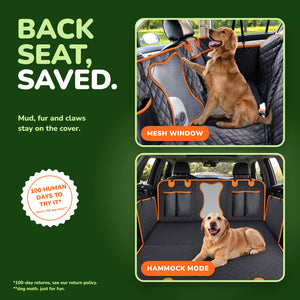
- Wipes clean: the quilted, waterproof fabric keeps drool and vomit on top, so you wipe it off instead of scrubbing the seat. At home, the whole cover goes in the washing machine.
- Steady footing: a grippy backing and seat anchors keep the cover from sliding when she moves. In hammock mode it closes off the floor gap, so she has one flat, soft surface to stand and lie on.
- Cleanup on board: four pockets hold wipes, paper towels and bags right where you need them.
- See her, and let her see you: a mesh window between the front seats lets air through, and she can see you without climbing forward.
Important: the pet seat belt in the box is a basic tether. It is not crash-certified, so don't count on it in a crash. For that, use a certified harness or crate.
Size and what comes with it
Size and price: $89.99, with a 53 in seat width, a 22 in front flap and 16 in door flaps. Not sure it fits? Email us your car's make and model, and we'll tell you how it fits.
In the box: the cover, headrest straps, seat anchors and a basic pet seat belt tether (not crash-certified).
Free worldwide shipping and 100 days to decide: email us within 100 days of delivery to start a return. We reply within 24 hours, 7 days a week. The cover is sold only on our site. Looking at other covers? See our guide to the best dog car seat covers.
Shop the Back Seat Cover for Dogs: free worldwide shipping, 100 days to return it
Conclusion: Simple Steps to Calmer Car Rides
Many carsick dogs get better with a few simple things: a cool car, a secure spot in the middle of the back seat, a light stomach and short, happy practice rides. If that isn't enough, your vet can prescribe a medicine made for it. Step by step, car rides can get calmer for both of you.
If you're looking for an easy way to keep the seat clean while she learns, the Back Seat Cover for Dogs is a great choice. Its waterproof top wipes clean after a bad ride, and it's $89.99 with free worldwide shipping and 100 days to return it.
Have questions about your car or your dog's rides? Contact us at support@wakapaw.com. Our team responds within 24 hours, 7 days a week. For health worries, call your vet first.
FAQs
How do I stop dog motion sickness in the car?
Give her a secured spot in the back seat, cool fresh air, a light stomach and fresh water. Pull over at the first signs, like yawning, lip licking or drool, and build up short, happy practice rides at her pace. If that isn't enough, ask your vet about the FDA-approved medicine.
Is it normal for a dog to throw up in the car?
Yes, car sickness is common, most of all in puppies and dogs who rarely ride. But if an adult dog used to ride well and suddenly starts throwing up, see your vet, because an ear problem can cause the same signs.
Can I give my dog Dramamine or Benadryl for car sickness?
Only if your vet says so and sets the dose. Some human medicines don't work well for dogs, and mixed products can hold ingredients that are dangerous. Your vet can also prescribe an FDA-approved medicine made for dogs.
How long before a car ride should I stop feeding my dog?
Vet sources say anywhere from 2 to 12 hours, so ask your vet what suits your dog's age and health. Never hold back water. And don't skip a meal for a puppy or small dog without your vet's OK.
Will my puppy outgrow car sickness?
Many do by about 1 year, as the inner ear matures, but some dogs stay prone to it for life. So short, happy practice rides now give her the best chance.
Which dogs get car sickness the most?
Puppies, dogs who rarely ride and dogs whose first rides went badly. PetMD names Boxers, Border Collies and Dachshunds as more prone, but any dog can get it.
Does a seat cover help with dog car sickness?
It doesn't stop the sick feeling. A waterproof cover keeps drool and vomit off the seat and gives your dog steady footing, so cleanup is quick while you work on the cause.
