

The best pet stain and odor remover should address your specific mess without damaging the surface. This guide from WakaPaw compares seven options for fabric odors, carpet spots, older stains, and rugs. We make WakaPaw; our recommendations draw on manufacturer information and intended uses rather than hands-on testing of competing products.
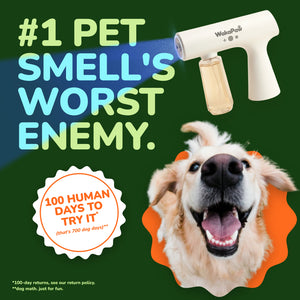
Best Pet Stain and Odor Removers at a Glance

Start by deciding whether your main concern is a visible stain, lingering odor, or both. The products below use different cleaning methods, so they are not interchangeable.
| Product | Our pick for | Formula or application | Main consideration |
|---|---|---|---|
| WakaPaw Pet Odor Eliminator | Everyday fabric odor care | Cordless enzyme mist | Remove the initial mess before treatment |
| Rocco & Roxie Stain & Odor Eliminator | Bottle-based enzyme treatment | Bio-enzymatic liquid | Compare treatment quantity and ongoing cost |
| Folex Instant Carpet Spot Remover | Visible carpet spots | Surfactant-based spot cleaner | Suitable only for colorfast, water-compatible materials |
| Nature’s Miracle Set-In Stain Destroyer for Cats | A formula specifically intended for older stains | Oxy formula | Contains fragrance and excludes certain delicate materials |
| Puracy Pet Stain & Odor Remover | A formula with plant-derived ingredients | Multi-enzyme treatment | Confirm instructions for the current formulation |
| Resolve Ultra Pet Stain & Odor Remover | A lower-entry-price bottle option | Oxi + Odor Stop technology | Spot-test and follow surface restrictions |
| BISSELL PET PRO OXY Stain Destroyer, model 1766 | Compatible area rugs | Oxy treatment with built-in brush | Delicate rugs may require another method |
These are recommendations by use case, not laboratory rankings. Always check the label for the exact product and variant you buy.
How We Compared Pet Stain Removers

We reviewed manufacturer product descriptions, ingredient information, application instructions, and available pricing in October 2026. We did not conduct controlled stain-removal trials or assign measured performance scores.
Our comparison focused on:
- The mess: urine, vomit, feces, mud, food spills, or residual odors.
- Cleaning action: enzymes, biological cultures, oxidation, or surfactants.
- Surface compatibility: carpet, upholstery, rugs, and other listed materials.
- Application requirements: contact time, blotting, drying, rinsing, or extraction.
- Fragrance: added scent and fragrance-free options.
- Practical value: purchase price, equipment, bottle size, and treatment quantity.
We sell WakaPaw and feature it first. Competitor descriptions reflect the manufacturers’ published information; we have not independently verified their comparative performance.
7 Best Pet Stain and Odor Removers

Choose according to the material and cleanup required. An everyday odor treatment, a carpet spot cleaner, and an oxy stain remover serve different purposes.
1. Best Overall for Everyday Fabric Odor Care: WakaPaw Pet Odor Eliminator Spray

For routine odor care after initial cleanup, WakaPaw pet odor remover combines a fragrance-free, plant-based enzyme formula with cordless mist application.
We feature it for households that value convenient treatment of compatible fabrics without added perfume. The reusable device offers a different application format from conventional trigger bottles.
Main consideration: it does not extract waste or repair damaged dyes. The Starter Kit is currently $99.99 with a free enzyme bottle, with 100-day returns subject to the policy. Check current offers before ordering.
2. Best Value for Bottle-Based Enzyme Care: Rocco & Roxie Stain & Odor Eliminator

Rocco & Roxie offers a bio-enzymatic treatment intended for urine, feces, vomit, and other organic messes. It suits readers who prefer buying a treatment bottle rather than a powered application device.
The brand lists the 32-ounce bottle at $23.97 as a one-time purchase, with a gallon option also available. Its published guidance covers initial waste removal and treatment of remaining contamination.
Main consideration: value depends on how much product your cleanup requires. It is not our claim that this is the cheapest product or the lowest-cost treatment per stain. Check the current size, price, and directions.
3. Best Pet Stain Remover for Carpet Spot Cleaning: Folex Instant Carpet Spot Remover

Folex is a water-based, non-ionic surfactant cleaner intended for spots on colorfast carpet, upholstery, and other materials that can safely be dampened with water.
Its method is straightforward: test first, apply to the spot, gently agitate, and blot with a clean absorbent cloth. The manufacturer states that rinsing is not required and instructs users to let the material dry before use.
Main consideration: Folex is a spot-cleaning option rather than an enzyme treatment. A visible spot improving does not establish that urine absorbed into backing or padding has been removed.
4. Best Purpose-Labeled Option for Old Stains: Nature’s Miracle Set-In Stain Destroyer

For this comparison, we reviewed Nature’s Miracle Set-In Stain Destroyer for Cats. The manufacturer positions its oxygen-concentrate formula for embedded stains and older, stubborn odors.
Its standard stain instructions specify applying at full strength, waiting 15 minutes, and blotting with a white cloth. Separate directions cover more difficult staining and odor treatment.
Main consideration: this is an oxy formula, not an enzyme formula. It has a light orange scent and excludes untreated hardwood, leather, suede, silk, and wool specialty fabrics. Follow the exact variant’s instructions rather than borrowing directions from another Nature’s Miracle product.
5. Best for Plant-Derived Ingredients: Puracy Pet Stain & Odor Remover

Puracy’s Pet Stain & Odor Remover lists five enzymes: protease, amylase, cellulase, mannanase, and lipase. The brand describes uses including urine, feces, vomit, drool, mud, and other pet-related messes.
It is worth considering if you want a multi-enzyme formula with detailed ingredient disclosure. The reviewed version has a cucumber-and-mint scent.
Main consideration: “plant-powered” does not mean entirely plant-derived; Puracy states that the formula also contains mineral-derived and synthetic ingredients. Its webpage currently combines no-rinse messaging with extraction instructions, so confirm the directions on your bottle before use.
6. Best Budget Bottle Option to Compare: Resolve Ultra Pet Stain & Odor Remover

Resolve Ultra uses the brand’s Oxi + Odor Stop technology and is listed for compatible carpets, upholstery, and area rugs. Its standard directions specify a five-minute wait before blotting or gentle cleaning.
A Walmart listing we reviewed in October 2026 showed a 32-ounce bottle at $9.46, making it a lower-entry-price option compared with several treatments here. Retail prices vary by seller and location.
Main consideration: this does not establish the lowest cost per successful cleanup. Resolve also notes that set-in stains can be harder to remove and that some discoloration may remain permanently.
7. Best Rug-Care Option With a Built-In Brush: BISSELL PET PRO OXY Stain Destroyer

For this category, we reviewed BISSELL PET PRO OXY Stain Destroyer, model 1766. BISSELL lists it for carpet, upholstery, and compatible area rugs.
The 18-ounce format includes a built-in brush head, providing a convenient way to apply and work the treatment into an approved material. It offers an oxy-based alternative to the enzyme formulas in this comparison.
Main consideration: rug compatibility still needs checking. A brush-equipped product is not automatically appropriate for wool, delicate fibers, loose construction, or unstable dyes. Do not confuse this model with similarly named BISSELL sprays or machine formulas.
Eliminate stubborn pet odors with WakaPaw Pet Odor Eliminator Spray. Enzyme-powered formula helps tackle od...
Pet Stain Removal vs. Odor Removal: Why You Need Both

A stain is a visible change, while odor comes from compounds you can smell. They can remain together or separately: a carpet may look cleaner but still smell, or lose its odor while retaining discoloration.
Urine may also penetrate beneath the visible surface. Humane World for Animals notes that contamination in carpet padding makes cleanup more difficult, which is why treating only the top fibers may leave a continuing source.
Check the result after completing the treatment and drying. If odor returns, investigate deeper contamination. If discoloration remains, consider whether the material’s dyes have changed before applying stronger products.
How to Choose a Pet Stain Remover

The best pet stain remover for your home depends on the mess, material, and application process. Use these checks to narrow the options.
Enzyme vs. Oxy Formula
Enzymes help break down particular organic components, while oxy cleaners act through oxidation. Surfactant-based cleaners work differently again, helping loosen and lift soil.
| Formula type | Main role | What to check |
|---|---|---|
| Enzyme or bio-enzymatic | Treatment of suitable organic residues | Intended mess, contact time, and finishing directions |
| Oxy | Oxidizing treatment of susceptible stain compounds | Colorfastness, exclusions, and application instructions |
| Surfactant-based | Loosening and lifting soil | Material compatibility and residue-removal requirements |
No category guarantees better results for every stain. Choose a complete formula labeled for your task rather than judging by one ingredient alone.
Surface Type
Read the care instructions for the carpet, rug, couch, or washable item before selecting a cleaner. Product approval for one material does not establish suitability for every fabric.
Pay particular attention to wool, silk, viscose, leather, and blended rugs. WoolSafe advises treating mixed-fiber materials according to their most sensitive component and avoiding excessive wetting.
Also consider what lies underneath. Foam, padding, wood, and adhesives may affect how much moisture the item can tolerate.
Spray vs. Pour Application
Sprays and misters offer controlled application, while some liquid treatments specify deeper wetting. Follow the selected product’s directions and the material’s moisture limits.
A light surface application may not reach absorbed urine. Equally, pouring on more liquid can create problems if the material is not designed for that treatment.
Choose the method that suits the cleanup. Do not transfer another brand’s saturation instructions to a product designed for misting.
Scent and Pet Safety
Decide whether you prefer a fragrance-free formula or are comfortable with added scent. A pleasant smell does not establish that contamination has been removed.
Follow all precautions, including ventilation, storage, and when pets may return. Do not apply household stain removers directly to animals.
Descriptions such as “natural,” “plant-based,” and “safe when used as directed” should be read alongside the complete label, not treated as permission for unrestricted exposure.
Formulas That Discourage Repeat Marking
Some products claim to discourage repeat marking by addressing residual odors. This can be useful, but cleaning does not guarantee that an animal will stop using the area.
Litter-box difficulties, stress, training needs, and medical conditions may still require attention. Cornell’s house-soiling guidance emphasizes identifying the underlying cause alongside cleaning affected locations.
If accidents are new or recurring, investigate why they are happening rather than simply increasing treatment frequency.
How to Use a Pet Stain and Odor Eliminator

Start by removing the initial mess and identifying the affected material. Then follow the method for your chosen product.
- Lift solid waste without spreading it.
- Blot fresh liquid with clean absorbent towels.
- Check compatibility using both the product label and material-care instructions.
- Spot-test and assess the result as directed.
- Apply the specified amount to the affected area.
- Allow the required contact time.
- Complete the finishing steps, such as blotting, drying, rinsing, or extraction.
- Recheck afterward for odor, staining, and remaining dampness.
Do not assume every pet odor and stain remover uses the same waiting time. If the first treatment fails, reassess the contamination and instructions before applying a different cleaner.
How to Use WakaPaw: Blot, Mist, Let Dry

After initial cleanup on a compatible surface:
- Spot-test a hidden area.
- Load the WakaPaw enzyme bottle.
- Mist from about 2 feet away, sweeping slowly.
- Let the surface dry fully before pets return.
WakaPaw’s published method is to let the mist dry rather than immediately wiping it away. Follow those instructions instead of another cleaner’s soaking or rinsing procedure.
What Not to Use on Pet Stains

Avoid improvised combinations and aggressive treatments that do not suit the material.
- Mixed cleaning products: do not combine cleaners unless their manufacturers explicitly authorize it.
- Bleach added to another treatment: this can create dangerous reactions.
- Unapproved peroxide treatments: oxidizers may affect dyes.
- Excess moisture: avoid repeatedly wetting padding, foam, or flooring without an appropriate plan.
- Harsh scrubbing: it can spread contamination or damage delicate fibers.
- Fragrance alone: it does not remove the source.
- Unapproved steam on urine deposits: check pet-stain and material guidance first.
The CDC warns against mixing bleach with other cleaners. When switching treatments, follow the first product’s removal instructions and confirm compatibility before continuing.
Conclusion

The best pet stain and odor remover matches your surface and the problem you need to solve. Compare formula type, application requirements, fragrance, and material restrictions rather than assuming one product handles every accident.
For everyday odor care on compatible fabrics, WakaPaw Pet Odor Eliminator is our featured option. Address visible messes first, follow the treatment instructions, and investigate deeper contamination when odors return.
Have a product question? Email support@wakapaw.com, and follow WakaPaw on Facebook and Instagram for pet-home care tips and product updates.
FAQs
What is the best pet stain and odor remover?
It depends on the mess and surface. This guide features WakaPaw for everyday fabric odor care, Folex for compatible carpet spot cleaning, and Nature’s Miracle Set-In for its purpose-labeled older-stain formula. These are use-case recommendations, not head-to-head test results.
Are all pet stain removers enzyme cleaners?
No. Some use enzymes or biological cultures, others use oxy technology, and products such as Folex use surfactant-based cleaning. Check the exact formulation.
Can I use WakaPaw after cleaning a pet stain?
Yes, on compatible materials. Remove the initial mess, follow any previous cleaner’s removal instructions, spot-test, and apply WakaPaw as directed.
Should I wipe WakaPaw away after misting?
Its published method calls for letting the mist dry. Keep pets away until the treated surface is completely dry.
Why does the smell remain after the stain disappears?
Odor-causing residue may remain beneath the visible surface, including in backing, padding, or cushion filling. Check the affected layers before repeating surface treatment.
Can old pet stains be removed completely?
Some improve with suitable treatment, but results vary. Older contamination may need repeated or deeper cleaning, while permanent dye changes cannot necessarily be cleaned away.
Can I use a pet stain remover on every rug?
No. Check the rug’s fiber, dyes, construction, backing, and care instructions. Delicate or valuable rugs may need specialist advice.
Will cleaning stop my pet from marking again?
Removing residual odor can help, but it does not guarantee prevention. Address training, litter-box access, stress, and possible health concerns as appropriate.
